
Automatic temperature compensation is a stated operating window, not permission to ignore sample temperature. The HighPrecis listing writes 10–40°C. ATAGO’s PAL-1 page writes 10–100°C and still sells a cooling cover for hot samples. Distilled water is the zero check on these digital sucrose meters. Olive oil, liquid paraffin and a 78.8°Bx fluid belong to honey-moisture practice and are not a procedure on this site.
Source-based explanationWhich temperature windows are written on the product pages?
The HighPrecis listing writes automatic compensation from 10–40°C and a 0.3 ml sample. ATAGO’s PAL-1 page writes temperature compensation from 10–100°C. The Milwaukee homepage mentions automatic temperature compensation without a numeric window on the text checked. Those sentences are the published windows. They do not say the prism and the drop have already reached that window, and they do not replace a recorded sample temperature.
| Listing | Published temperature note | What remains open |
|---|---|---|
| HighPrecis 0–55% | ATC 10–40°C; 0.3 ml sample | Whether a particular drop was inside that window |
| PAL-1 (ATAGO USA page) | Compensation 10–100°C; cooling cover sold separately | Whether a hot sample needs that cover on your bench |
| MA871 homepage | ATC mentioned | No numeric window restated from that homepage |
Does ATC let you measure a hot sample without waiting?
Compensation assumes the instrument is operating inside the window the manufacturer wrote. A drop that is still much hotter or colder than the prism can evaporate, streak or sit outside that window. ATAGO sells a cooling cover for the PAL-1 to reduce evaporation on hot samples, which is a reason to treat “ATC” and “measure immediately while hot” as different instructions. This site has not timed prism equilibration on juice, wort or jam.
What does a distilled-water zero establish?
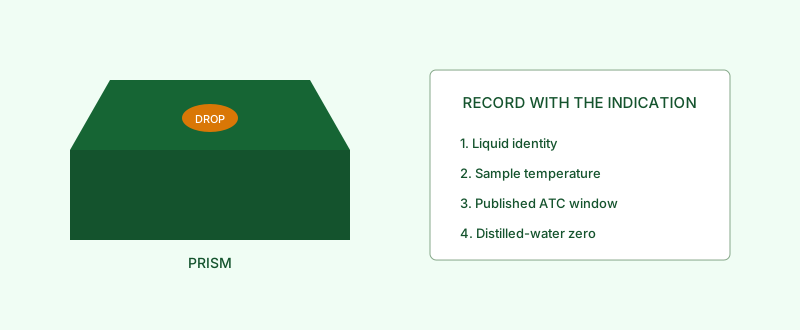
A digital sucrose meter is commonly zeroed on distilled water so the sucrose scale reads zero under the stated conditions. That check confirms the zero point of that scale on that day. It does not confirm the rest of the range, and it does not convert the instrument into a honey-moisture meter or a urea meter. Record the water, the temperature and the displayed zero. A successful zero is not a calibration certificate.
Why are kitchen oils and 78.8°Bx fluids not a sucrose-meter procedure here?
The Dave Cushman archive records kitchen oils on a honey-moisture scale and two conflicting shortcuts: liquid paraffin at 24.5% moisture, and extra-virgin olive oil at 71.5°Bx. A related honey listing mentions a fluid near 78.8°Bx. Those operations are not a distilled-water zero on a sucrose meter. England’s honey limits are a legal text, not a check of a cheap optical meter, and they stay off this procedure.
Which sources support this reference, and what are their limits?
These sources support the terminology, declared ranges and attributed observations discussed here. Retailer and manufacturer sentences are not measurements by Brix Meter. Another author’s beer or cider figures stay inside the liquid they measured. The pages were checked on .
- ATAGO USA: PAL-1 product page ↗
Manufacturer page. Brix is defined on sucrose in water. Additional solutes change the indication. Checked 23 September 2026.
- Dave Cushman archive: honey refractometer calibration ↗
UK beekeeper correspondence. Kitchen-oil readings and two conflicting shortcuts. The page says the figures are not a formal calibration.
- The Honey (England) Regulations 2015 ↗
Composition limits for honey offered for sale in England. The instrument is not named. A moisture-scale reading is not a legal determination.
What should stay with the reading?
A useful Brix record keeps the liquid, the published scale, the sample temperature, the instrument and the original indication together. Use the blank record if you need a field list. See how we assess evidence and the commercial relationship when judging a published conclusion.